



04.10.2026
Brand marketing strategy should be developed before packaging design, not after

If a brief intended for collaboration begins with the words “we just need packaging,” then one very important stage has already been overlooked. The first question from a professional design agency should not be about color or style. The first question should be: what business problem is this packaging supposed to solve? Starting work without answering this question is not merely a theoretical mistake; it is a serious flaw that can lead to major financial losses. One of the most famous failures in global branding practice happened precisely because this question was ignored.
A six-day mistake that cost 100 million dollars
In October 2010, the well-known fashion retailer Gap suddenly replaced its familiar blue logo, which had been used for two decades. It introduced a simpler version set in Helvetica. When asked about the reason, company representatives explained that the new logo was intended to look more modern and attractive. However, there was no clear strategic objective or market-driven reason behind the change. In practice, it appeared to be a decision based more on management preference than on strategy. The strategic reason for the change was never clearly explained to the audience.
The market reacted almost immediately. Thousands of negative comments appeared online within the first day, dedicated protest pages were created, and thousands of parody versions of the new identity began circulating. As a result, only six days later, the company officially abandoned the new logo and returned to the previous one. The failed initiative is often estimated to have cost the company approximately 100 million dollars.
What lesson does this story offer for packaging design? Branding analysts generally agree on one key point. The main problem was not whether the new logo looked good or bad. The real issue was the absence of a convincing reason for the change. The company’s market positioning had not changed, and neither had its product offering. At the same time, Gap was losing ground under pressure from major competitors such as Zara, H&M and Uniqlo. In this situation, no clear answer was given to the question of why only the visual identity was changing while the underlying business remained the same. Without such an answer, even a professionally executed design could not justify itself either to customers or, as the six-day reversal demonstrated, to the company’s own leadership.
What should be decided before the design brief?
Define the target audience. A target audience should not be understood as a vague group of people, but as a specific type of customer. For example, “everyone who buys yogurt” is not a meaningful target audience. You need to understand exactly who this person is, which brand they currently choose instead of yours, and why they make that choice. A design created for an undefined audience usually tries to appeal to everyone and, as a result, attracts no one strongly enough.
Define positioning against specific competitors. Positioning should always be established relative to real competitors. For example, describing a product as “high quality” communicates almost nothing, because every brand on the shelf claims to offer quality. Positioning should answer one clear question: what does the customer get from your product that they cannot get from the nearest competing product on the same shelf?
Build the brand architecture. Is this product part of an existing product line, a new sub-brand, or an entirely independent brand? Depending on the answer, the design should either be visually connected to the parent brand or deliberately differentiated from it. This is not merely an aesthetic decision; it is an important business decision. Responsibility for making that decision should not be left entirely to the designer.
Define the price segment and distribution channel. Whether the product is intended for the premium market, mass market, or export market directly affects the choice of packaging materials, finishing techniques, and even the packaging structure itself. If these questions are only addressed halfway through the project, there is a serious risk that an attractive design concept will simply not fit the product’s cost structure or economic model.
Define the key message. At the shelf, a product may have only one or two seconds to attract the customer’s attention. The company must decide in advance which signals need to be communicated within those seconds. This should be established before the designer begins working on the composition, rather than being solved later through endless revisions and repeated requests to “add one more thing.”
Why can’t beautiful design replace strategy?
A design created without answers to the questions above may still look visually impressive. However, such a design responds to personal taste rather than to business needs. The most difficult part usually begins during internal discussions. Without clear evaluation criteria, every meeting turns into a clash of subjective preferences. One person prefers blue, another prefers green. When there is no objective basis for evaluation, the final decision is often determined by the manager’s personal taste or simply by whoever argues the loudest.
A design based on a clear strategy, however, can be defended objectively in front of the client. For example, the reason for choosing a particular color can be explained by showing how it communicates a specific product characteristic to the target audience and differentiates the product from competitors. The chosen shape can be justified by demonstrating how it matches the intended price segment. Such discussions remain creative, but they are far more structured and much less vulnerable to subjective last-minute changes.
What should this process look like in practice?
On Minim’s packaging design service page, the first stage of the process is clearly defined. The work does not begin with drawing graphics, but with identifying a conceptual direction that matches the brand, its market positioning and its business goals. The creation of graphic elements such as the logo, color palette and typography comes only at the next stage. This is not simply a nice phrase written in a service description. It reflects the correct sequence of decision-making: first answer the questions “why” and “for whom,” and only then answer the question “what should it look like?”
A practical recommendation for companies planning to order packaging design is this: if you still do not have even draft answers regarding your target audience, market positioning, brand architecture and key message, then a professional partner should not begin with moodboards or sketches. The first meaningful stage should be the strategic part of the project, even if it is relatively concise. This approach does not slow the project down. On the contrary, it reduces the risk of having to redesign an attractive but commercially ineffective packaging solution from scratch several months later.
Main conclusion
The failure associated with Gap was not simply about a bad logo. It was the result of decisions being made in the wrong order: the visual change came first, while the strategic justification was either postponed or never properly established. In the FMCG sector, such mistakes may rarely become global public scandals, but their consequences are just as real. Without a strategy, design becomes decoration without a clear function, and every project discussion becomes a debate about personal taste instead of an evaluation against business objectives. Strategy must come before design not because this is a formal rule from a textbook, but because strategy gives design something that even the most talented visual execution cannot provide on its own: a clear answer to the question, “Why should this design look exactly this way?”
Share

Other articles
29.09.2026
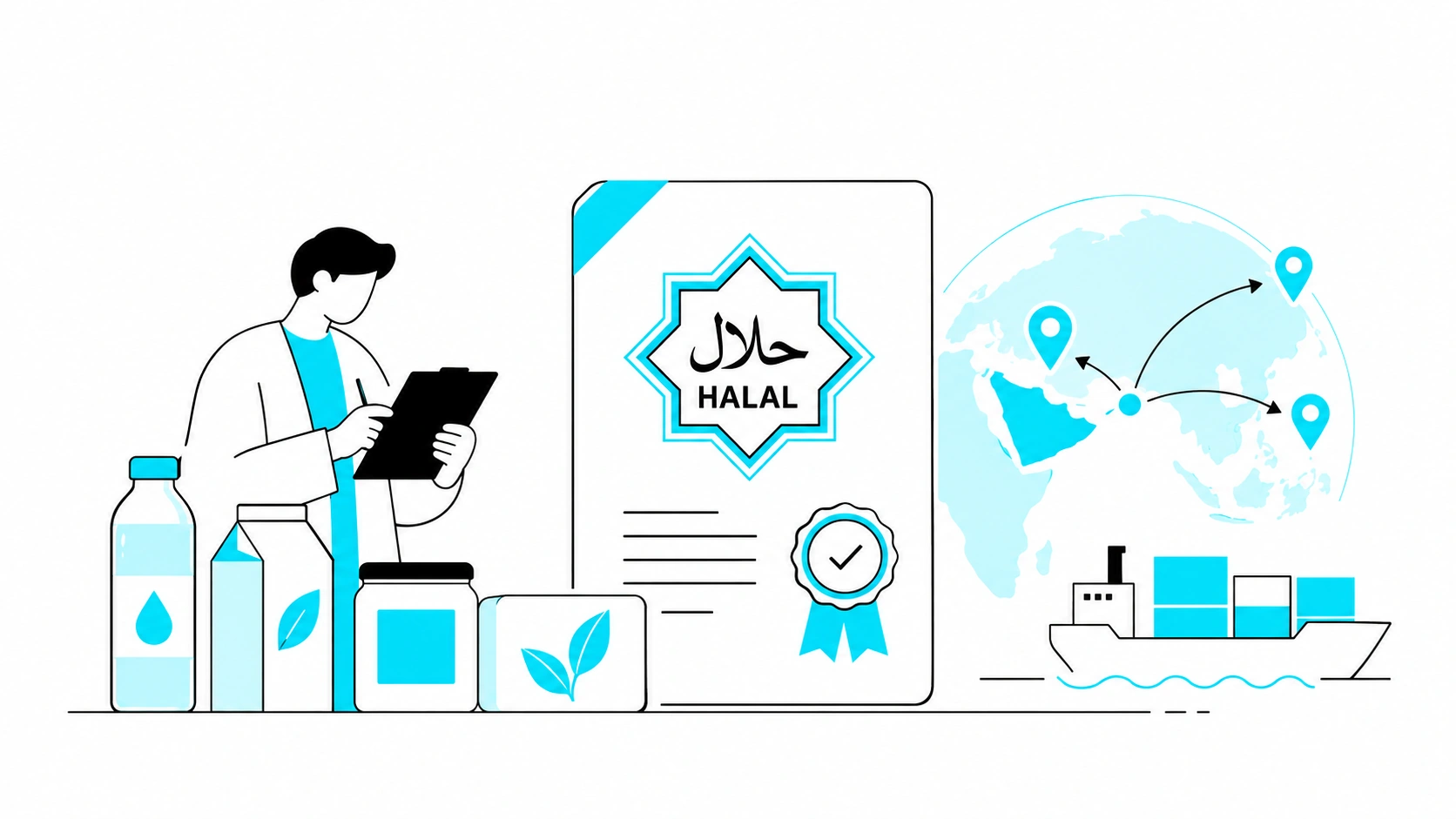
HALAL CERTIFICATE IN UZBEKISTAN: WHY YOUR BUSINESS NEEDS IT, HOW MUCH IT COSTS, AND HOW TO GET IT
In the past, the "Halal" mark was just a neat marketing trick for many. Slap a green crescent on the packaging, and sales would soar. No one really dug deep to see if there was any actual control behind the label. But the rules of the game have fundamentally changed. Starting May 1, 2025, "Halal" labeling in Uzbekistan was taken under strict state control. Now, this mark requires an official certificate based exclusively on SMIIC standards. Although obtaining the certificate is voluntary, if you want to enter major supermarket chains, export, or work with imported raw materials, it has become a core requirement for doing business.
If you produce food, cosmetics, or even ordinary bottled water, and you want your packaging to boost sales rather than collect fines for illegal labeling, you need to understand the new rules. In this article, we—as an agency working directly with brands—will break it all down for you from A to Z: who issues legitimate certificates today, by what criteria your production will be evaluated, how much the process costs, and in which unexpected products the Halal status plays a decisive role.

21.09.2026
Typical Packaging Mistakes Local Brands Make When Entering International Markets
More and more Uzbek manufacturers are looking beyond the domestic market. In many cases, packaging becomes one of the key factors that determines whether an export launch succeeds or fails. The problem is usually not the quality of the product itself, but the fact that packaging for foreign markets is developed in the same way as packaging for the domestic market. In other words, companies simply take the packaging that already works locally, translate the name into English, and consider the job done.
Below are the most common mistakes and why each of them can cost much more than it may seem at first.
15.09.2026
How do printing capabilities in Uzbekistan affect design?
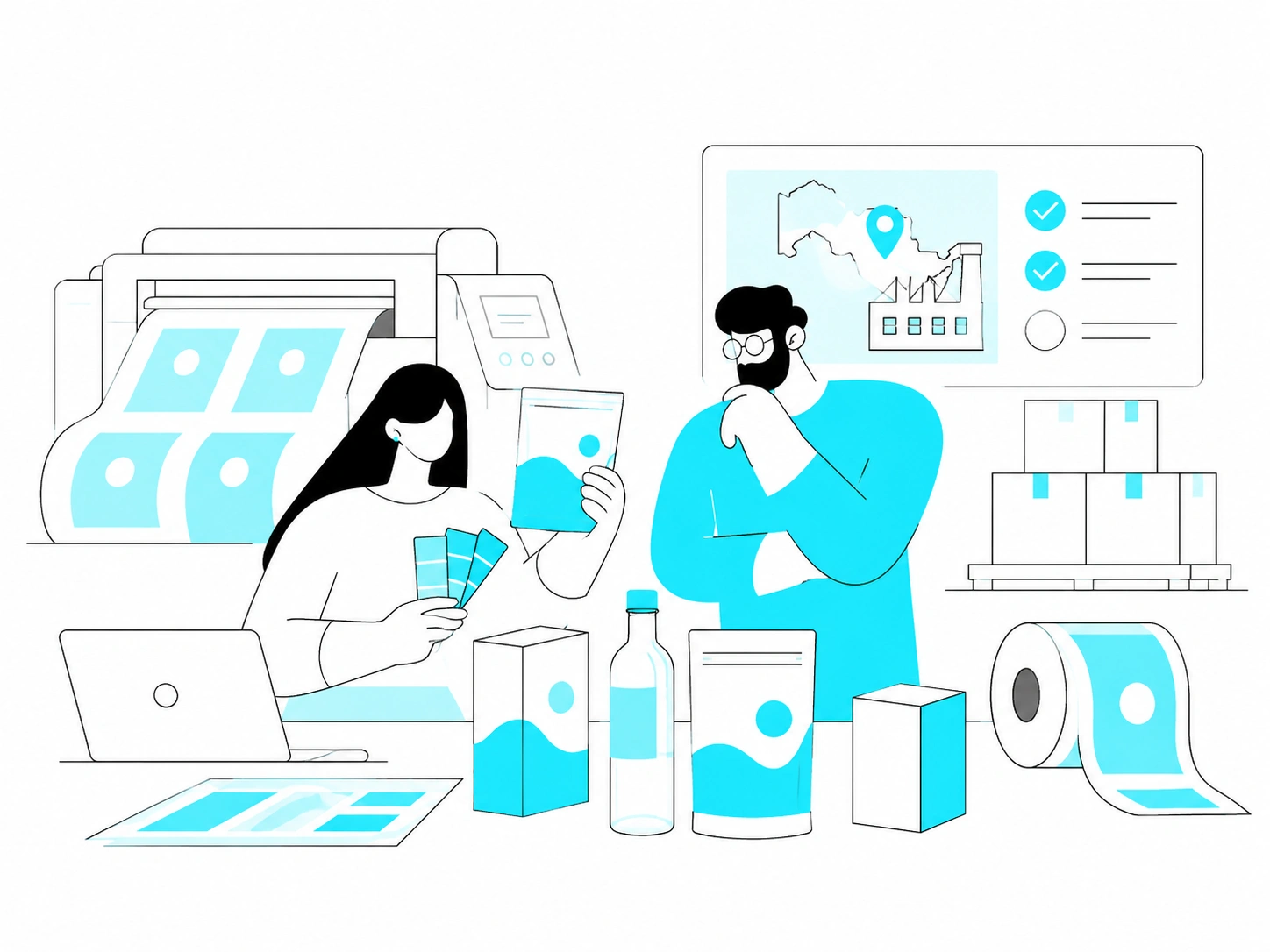
A beautifully designed prototype and the final packaging produced by a printing house are not always the same. A designer can create an unusual bottle, add a velvety label and gold lettering. But the main question should always be: “Can this actually be produced?”
Most importantly, this question must be asked during the design stage, before the packaging is approved. Otherwise, the result may be an expensive redesign or disappointment that “it looked better on the screen.”
Packaging production in Uzbekistan is growing together with the FMCG market. Therefore, understanding the real capabilities of local printing houses is just as important for a designer as having a good sense of color and composition.