



21.07.2026
Export Packaging Design: How “Made in Uzbekistan” Can Become a Competitive Advantage Rather Than a Limitation

The first instinct of many companies preparing to enter export markets is to hide the product’s country of origin somewhere on the least visible part of the label, fearing that foreign consumers may react negatively to the mention of Uzbekistan.
The concern is understandable, but it is not supported by research. A product’s country of origin is not an automatic disadvantage that needs to be concealed. On the contrary, it is one of the few brand assets that competitors from other countries cannot copy.
A Chinese, Turkish, or European producer cannot legitimately place “Made in Uzbekistan” on its packaging. The real question, therefore, is not whether the country of origin should be shown, but how it should be communicated.
How the Country-of-Origin Effect Actually Works
The country-of-origin effect has been studied in marketing since the mid-1960s. Since then, it has remained one of the most consistently observed patterns in consumer behaviour.
Consumers use a country’s reputation as a mental shortcut when evaluating a product, especially when they have limited information about the product itself.
One theoretical detail is particularly important for Uzbek exporters. In the classic work of researcher C. M. Han, it was shown that the country-of-origin effect can work differently depending on whether consumers are familiar with products from that country within a particular category.
When consumers are already familiar with such products, the image of the country functions as a summary of their accumulated experience. This perception can be difficult to change.
When consumers are unfamiliar with products from that country, the country image works as a halo effect. It shapes expectations about quality before the consumer has even interacted with the product, based primarily on broader associations with the country.
For most international consumers, Uzbek food, cosmetics, and consumer goods fall into the second category. They do not yet have a deeply established positive or negative perception.
This is not a weakness. It is a rare opportunity.
Uzbek brands can build their reputation almost from scratch instead of trying to overwrite a long-standing negative stereotype.
Another important point is that the country-of-origin effect varies by product category. The same country may be a powerful asset in one category and a largely neutral factor in another.
Therefore, the right question is not:
“Should we show the country of origin?”
The right question is:
“In which product categories does Uzbekistan have a genuine cultural, historical, or production-related advantage, and in which categories should this connection not be created artificially?”
A Clear Example: How Georgia Turned Its Soviet Legacy into Premium Export Value
Georgia’s wine industry provides a useful reference point. Like Uzbekistan, Georgia began its modern export journey from a post-Soviet position.
After the collapse of the Soviet Union, Georgian winemaking had to be rebuilt almost from scratch. The Soviet system had transformed it into the production of standardised mass-market wine, often sold under generic labels without a clearly identified individual producer.
Instead of competing with European wine producers entirely on European terms, Georgia focused on something genuinely unique to the country: its 8,000-year-old tradition of producing wine in qvevri, large clay vessels buried underground.
In 2013, UNESCO recognised the traditional Georgian qvevri winemaking method as part of the Intangible Cultural Heritage of Humanity.
The results were measurable.
By 2017–2018, Georgian wine exports had increased more than tenfold compared with the unstable early years of independence. Annual exports reached approximately 68–76 million bottles, generating more than USD 160 million in export revenue and reaching dozens of countries.
It was the story of origin—not price or quality alone—that opened new markets for Georgian wine, including Western markets where awareness of Georgia had previously been very limited.
However, there is also an important warning in this example.
The qvevri story became so successful that some industry professionals now speak about an “amber ceiling.” Qvevri wine represents only around five percent of Georgia’s total wine production, yet this story has become so dominant internationally that it can overshadow the wider diversity of Georgian winemaking.
A strong origin story can be an excellent entry point into a market. But if a brand relies on it indefinitely, the story may become a narrow frame that limits future growth.
What This Means for Uzbek Exporters
The logic that worked for Georgia can also work for Uzbekistan.
The goal is not to add an abstract “national style” to every package. The goal is to identify authentic connections between a particular product category and the history, culture, agriculture, or craftsmanship of the region.
The heritage of the Great Silk Road, traditional craftsmanship, and agricultural products cultivated in the region for centuries can provide strong material for origin stories—when the connection is natural and relevant to the product.
These cultural references should not be reduced to the mechanical use of ornaments on every package, regardless of the product category.
This principle was used in the export packaging design developed by Minim for the UzAgroStar brand. The arches featuring the symbols of Sherdor and the Simurgh were not used simply as decorative background elements.
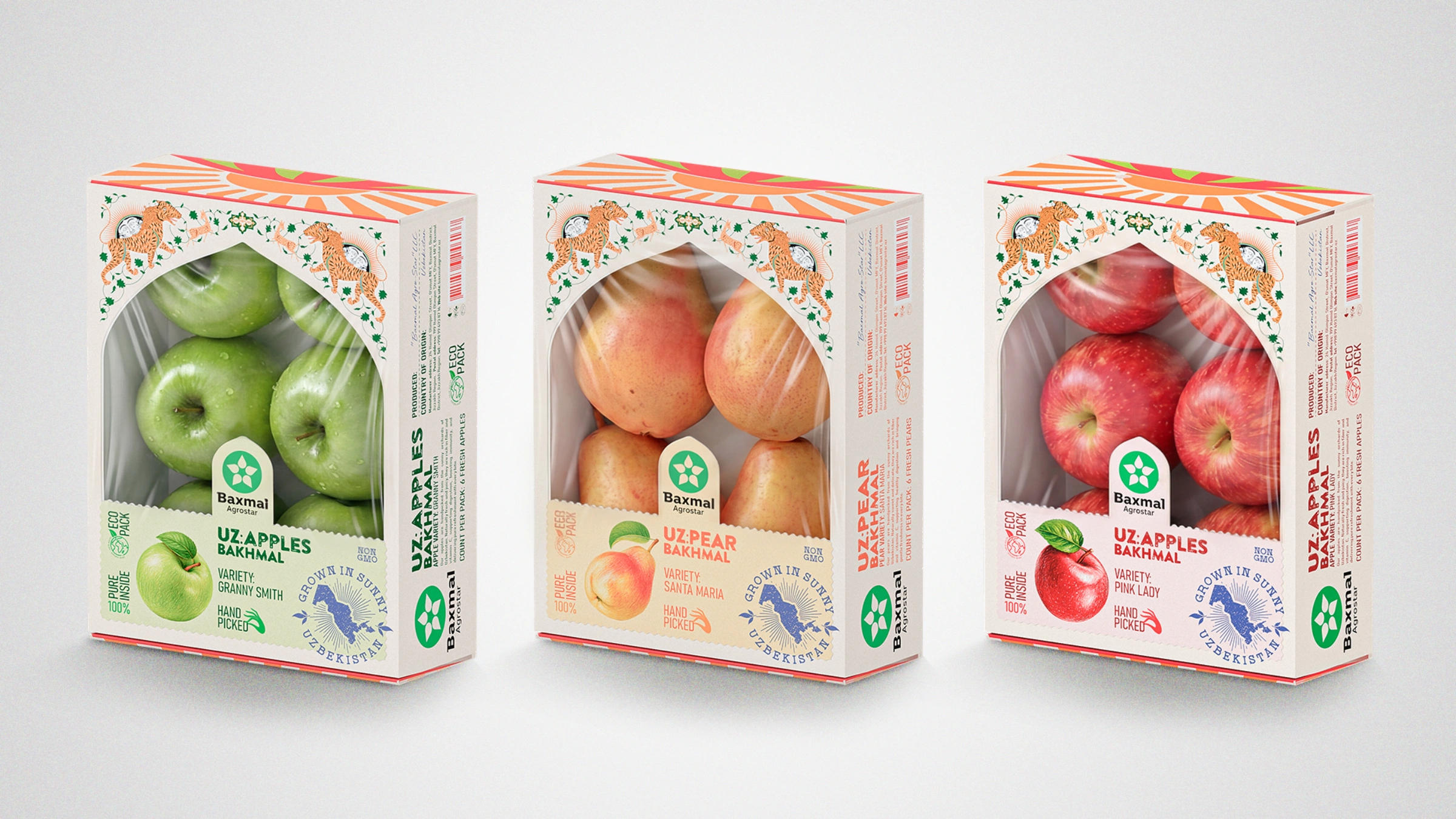
They became part of the product’s origin story, increasing its perceived value in international markets.
The same principle can be seen in the Georgian wine case: the country of origin becomes an integral part of the brand story instead of remaining a neutral fact printed in small text on the back of the package.
Practical Principles for Brands Choosing This Strategy
1. The Product Category Must Support the Story
The story should follow the category, not the other way around.
A narrative connected to ancient trade routes may work naturally for spices, tea, dried fruits, textiles, and other products that were historically part of such trade.
It will be far less convincing for categories that have no genuine connection to that history. When cultural references are added without a clear reason, consumers perceive them as decoration rather than meaningful communication.
2. External Validation Makes the Story More Credible
Independent confirmation is stronger than self-description.
UNESCO recognition played an important role in Georgia’s case because it validated the qvevri tradition through an independent international institution.
For Uzbek brands, the same function can be performed by industry certifications, international awards, membership in professional associations, protected geographical indications, laboratory results, and objective technical characteristics.
The origin story should not be supported only by marketing copy. It should also be confirmed by credible third parties.
3. Do Not Turn One Cultural Motif into the Only Story for Every Product
The lesson of the “amber ceiling” is clear.
A strong origin story can open the door to a market, but the entire brand should not become permanently limited to that single image.
Brands should create enough strategic space to introduce a broader product range and additional brand meanings over time.
4. The Story Must Answer the Consumer’s Question: “Why Should This Matter to Me?”
An effective origin story should do more than express national pride.
It must explain a clear benefit for the consumer: a distinctive taste, a special production method, rare raw materials, craftsmanship, authenticity, or superior product quality.
Simply stating that a product was made in Uzbekistan is not enough.
The difference between a decorative national story and a commercially effective origin story is whether it gives the buyer a meaningful reason to choose the product.
Main Conclusion
“Made in Uzbekistan” does not carry a predetermined verdict. It is neither automatically negative nor automatically positive.
For many international consumers, it is still almost a blank page. There is no deeply established perception that Uzbek brands need to erase. The first lasting impression is still being formed.
Georgia’s experience demonstrates that, within a relatively short period, a post-Soviet country can transform its industrial legacy into a premium origin story.
To achieve this, brands must identify something genuinely distinctive within their culture, history, production methods, or natural resources that is relevant to the specific product category. They must then support this story not only with words, but also with quality, certification, recognition, and consistent brand execution.
For Uzbek brands entering international markets, this is not a hypothetical opportunity. It is a practical strategy that can already be applied today.
The key is to treat the country of origin not as an ornament placed on finished packaging, but as a meaningful business and brand decision.
Share

Other articles

04.10.2026
Brand marketing strategy should be developed before packaging design, not after
If a brief intended for collaboration begins with the words “we just need packaging,” then one very important stage has already been overlooked. The first question from a professional design agency should not be about color or style. The first question should be: what business problem is this packaging supposed to solve? Starting work without answering this question is not merely a theoretical mistake; it is a serious flaw that can lead to major financial losses. One of the most famous failures in global branding practice happened precisely because this question was ignored.
29.09.2026
HALAL CERTIFICATE IN UZBEKISTAN: WHY YOUR BUSINESS NEEDS IT, HOW MUCH IT COSTS, AND HOW TO GET IT
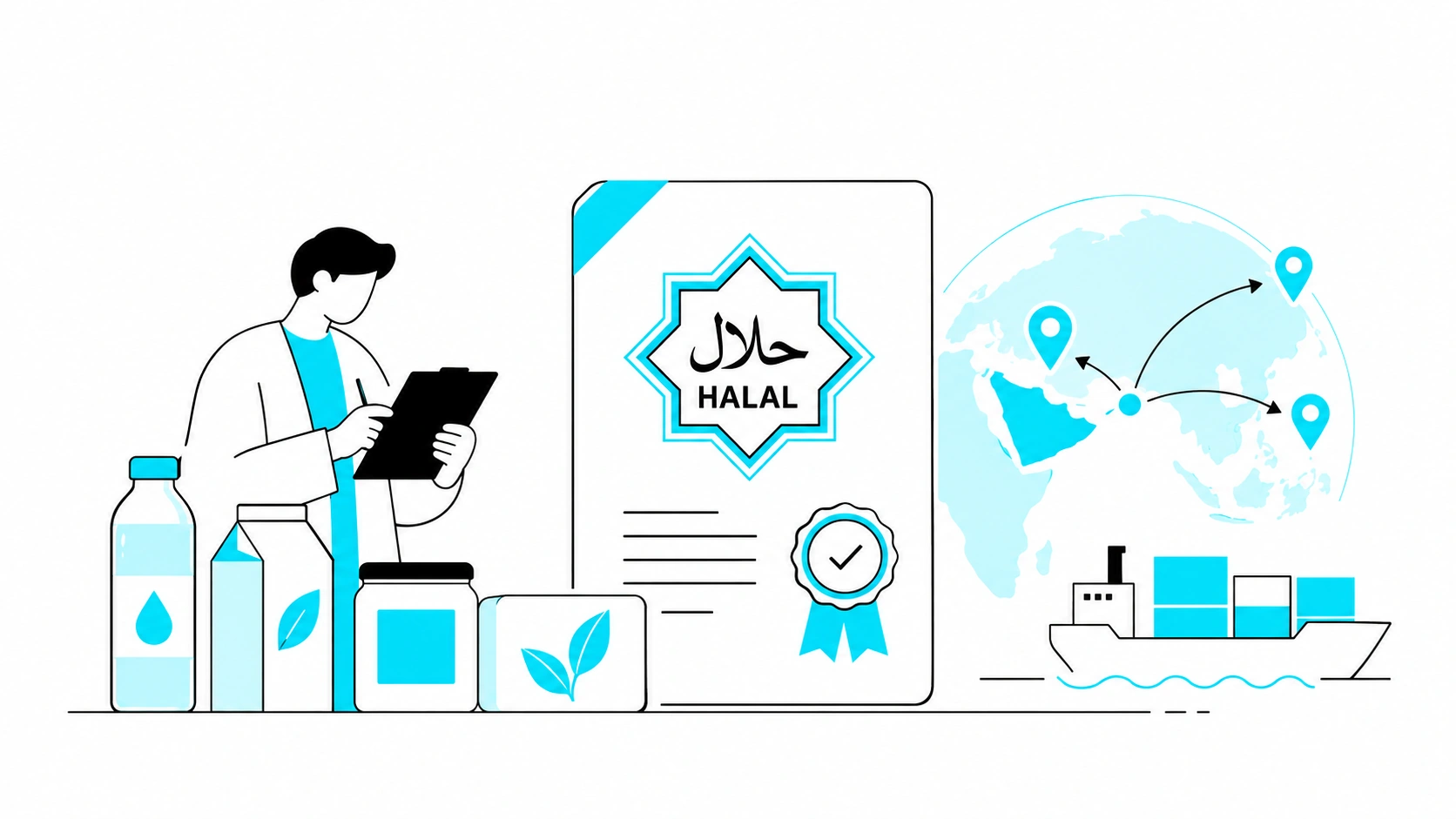
In the past, the "Halal" mark was just a neat marketing trick for many. Slap a green crescent on the packaging, and sales would soar. No one really dug deep to see if there was any actual control behind the label. But the rules of the game have fundamentally changed. Starting May 1, 2025, "Halal" labeling in Uzbekistan was taken under strict state control. Now, this mark requires an official certificate based exclusively on SMIIC standards. Although obtaining the certificate is voluntary, if you want to enter major supermarket chains, export, or work with imported raw materials, it has become a core requirement for doing business.
If you produce food, cosmetics, or even ordinary bottled water, and you want your packaging to boost sales rather than collect fines for illegal labeling, you need to understand the new rules. In this article, we—as an agency working directly with brands—will break it all down for you from A to Z: who issues legitimate certificates today, by what criteria your production will be evaluated, how much the process costs, and in which unexpected products the Halal status plays a decisive role.

21.09.2026
Typical Packaging Mistakes Local Brands Make When Entering International Markets
More and more Uzbek manufacturers are looking beyond the domestic market. In many cases, packaging becomes one of the key factors that determines whether an export launch succeeds or fails. The problem is usually not the quality of the product itself, but the fact that packaging for foreign markets is developed in the same way as packaging for the domestic market. In other words, companies simply take the packaging that already works locally, translate the name into English, and consider the job done.
Below are the most common mistakes and why each of them can cost much more than it may seem at first.