



21.09.2026
Typical Packaging Mistakes Local Brands Make When Entering International Markets

More and more Uzbek manufacturers are looking beyond the domestic market. In many cases, packaging becomes one of the key factors that determines whether an export launch succeeds or fails. The problem is usually not the quality of the product itself, but the fact that packaging for foreign markets is developed in the same way as packaging for the domestic market. In other words, companies simply take the packaging that already works locally, translate the name into English, and consider the job done.
Below are the most common mistakes and why each of them can cost much more than it may seem at first.
Mistake 1: Translation instead of localization
One of the most common mistakes is translating packaging text word for word or using AI-generated translation without proper adaptation. The consequences of this are often underestimated. The issue is not only the quality of the translation. A brand name that sounds perfectly natural in Uzbek or Russian may turn out to resemble slang, sound awkward, or have no meaning at all in another country.
The same applies to slogans and product descriptions. They should not simply be translated. They often need to be rewritten from scratch, taking into account how products in the same category are normally described in the target market. Translation answers the question: “What does this text say?” Localization answers a different question: “How will a local customer understand and perceive it?”
Mistake 2: Forgetting that every market has its own regulations
There is one issue that Uzbek exporters often misunderstand. Uzbekistan is not a full member of the Eurasian Economic Union. This means that the unified technical regulations that automatically apply to products manufactured within the union do not automatically apply to Uzbek products in the same way. In practice, different destination countries — such as Russia, Kazakhstan, and Kyrgyzstan — may require separate certification and labeling procedures.
This is only one part of a much broader issue. A label that is legally compliant and easy to understand in Uzbekistan may fail to meet local requirements abroad. These requirements may concern ingredients, nutritional information format, mandatory pictograms, labeling language, and country-of-origin information. These questions should be resolved during the packaging development stage, not after the shipment has already been stopped at customs.
Mistake 3: Transferring colors and visual elements without checking their meaning
Colors, shapes, images of animals or plants, and even the number of elements in a composition can be interpreted very differently in another market. Something that looks neutral or positive in Uzbekistan may be associated with negative meanings, low price, or even a completely different product category in another culture.
A well-known example is Coca-Cola advertising in Saudi Arabia, where visual communication was interpreted differently because the direction of Arabic writing had not been properly considered. Any visual element carrying cultural meaning in the domestic market should therefore be checked separately before being transferred to an international market.
Mistake 4: Packaging designed only for local logistics
Export shipments usually pass through far more loading, unloading, storage, and transportation stages than local deliveries. International logistics may involve several types of transport, long distances, as well as changes in temperature and humidity.
Packaging that perfectly maintains its shape on the way to a nearby store may fail during several days or weeks of transportation in a container. Many companies test packaging only under local conditions, which means the weakness becomes visible only after an export shipment has already been dispatched.
Mistake 5: Using “Made in Uzbekistan” as decoration instead of strategy
Brands planning to enter export markets often make two opposite but equally common mistakes. The first is using national patterns and cultural motifs simply as decoration, without a clear idea of why they are there or what they are supposed to communicate to an international customer. The second is doing the opposite — hiding the origin of the product because it is perceived as a weakness rather than an asset.
A stronger approach is to make the country of origin part of the brand story instead of treating it as a random decorative element. For example, in the export packaging design developed for the UzAgroStar brand, arches featuring the symbols of Sherdor and Simurgh were combined with the metaphor of a handmade gift. This turns the product’s origin from a neutral background detail into an element that adds value in an international market.
What separates attractive decoration from strategy? The visual solution must answer a simple question: “Why should an international customer care that this product was made in Uzbekistan?”
Mistake 6: Testing the design only with a local audience
Packaging tested only in the domestic market is often exported without further validation because companies assume that if it works locally, it will work abroad as well. However, an export market is a separate environment with its own audience, competitors, and visual expectations.
Before printing a full production run for a specific country, the minimum recommended step is to show the final packaging prototype to at least a small group of customers from the target market. This makes it possible to check whether the product category, positioning, and key message are understood as intended.
Main conclusion
Export packaging should not be an old design with a translated label. It should be treated as a separate project. Export packaging has its own regulatory requirements, cultural context, and logistical challenges. Most importantly, the country of origin should become part of a clear brand strategy.
Companies that take these factors into account during the design stage — rather than discovering problems at customs or on a foreign retail shelf — can enter international markets faster and with fewer losses.
Share

Other articles

04.10.2026
Brand marketing strategy should be developed before packaging design, not after
If a brief intended for collaboration begins with the words “we just need packaging,” then one very important stage has already been overlooked. The first question from a professional design agency should not be about color or style. The first question should be: what business problem is this packaging supposed to solve? Starting work without answering this question is not merely a theoretical mistake; it is a serious flaw that can lead to major financial losses. One of the most famous failures in global branding practice happened precisely because this question was ignored.
29.09.2026
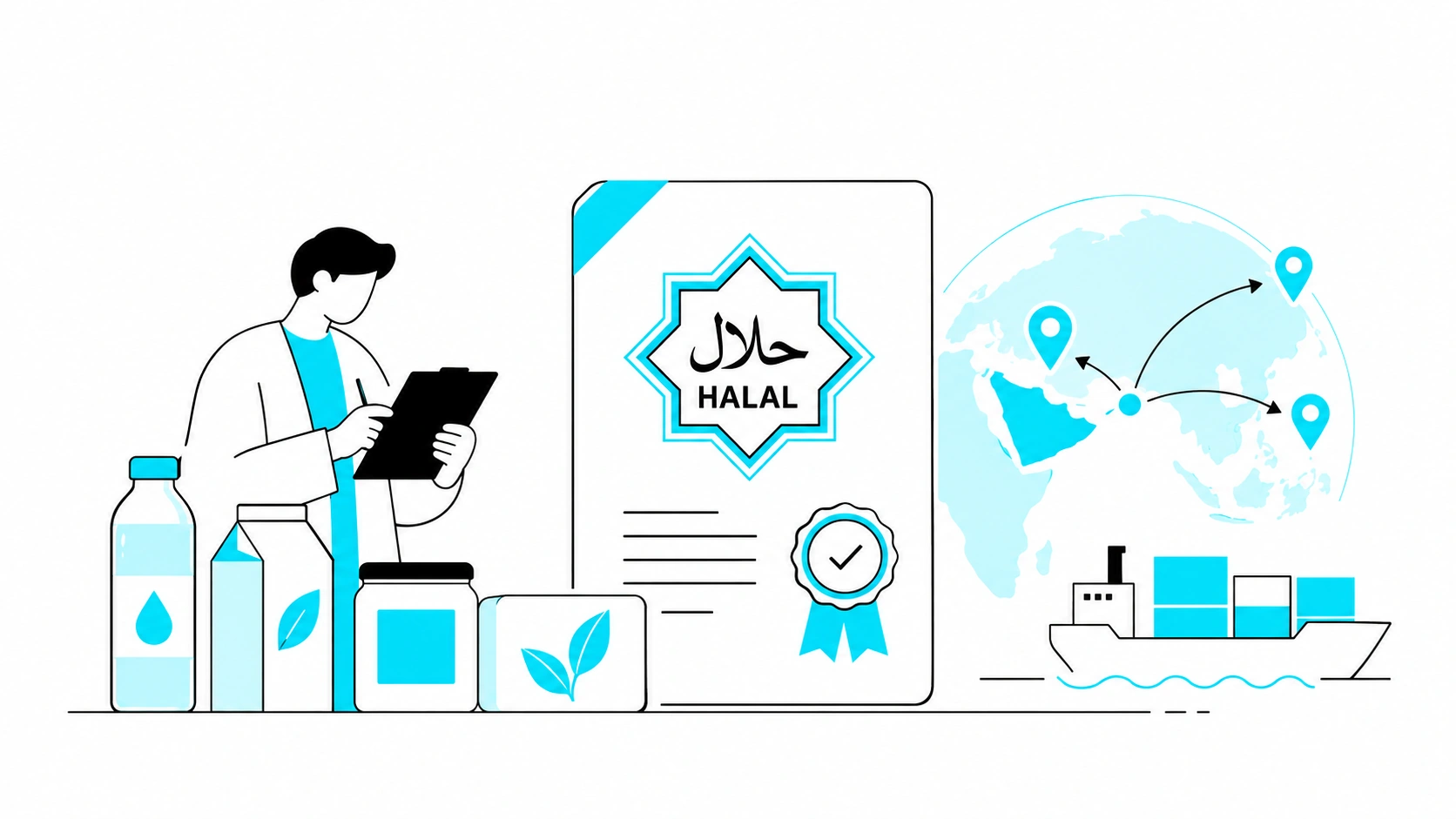
HALAL CERTIFICATE IN UZBEKISTAN: WHY YOUR BUSINESS NEEDS IT, HOW MUCH IT COSTS, AND HOW TO GET IT
In the past, the "Halal" mark was just a neat marketing trick for many. Slap a green crescent on the packaging, and sales would soar. No one really dug deep to see if there was any actual control behind the label. But the rules of the game have fundamentally changed. Starting May 1, 2025, "Halal" labeling in Uzbekistan was taken under strict state control. Now, this mark requires an official certificate based exclusively on SMIIC standards. Although obtaining the certificate is voluntary, if you want to enter major supermarket chains, export, or work with imported raw materials, it has become a core requirement for doing business.
If you produce food, cosmetics, or even ordinary bottled water, and you want your packaging to boost sales rather than collect fines for illegal labeling, you need to understand the new rules. In this article, we—as an agency working directly with brands—will break it all down for you from A to Z: who issues legitimate certificates today, by what criteria your production will be evaluated, how much the process costs, and in which unexpected products the Halal status plays a decisive role.

15.09.2026
How do printing capabilities in Uzbekistan affect design?
A beautifully designed prototype and the final packaging produced by a printing house are not always the same. A designer can create an unusual bottle, add a velvety label and gold lettering. But the main question should always be: “Can this actually be produced?”
Most importantly, this question must be asked during the design stage, before the packaging is approved. Otherwise, the result may be an expensive redesign or disappointment that “it looked better on the screen.”
Packaging production in Uzbekistan is growing together with the FMCG market. Therefore, understanding the real capabilities of local printing houses is just as important for a designer as having a good sense of color and composition.